Ready for more?


How a Car Ride Complaint Became a Million Dollar Beauty Brand with Charlie Pond from The Guideliner
Charlie Pond is the founder of The Guideliner, an innovative winged eyeliner that uses a peel, press, and seal method to make the trickiest part of any makeup routine actually doable. The idea came to her during a car ride to the gym, and 18 months later she and her husband Danny have bootstrapped their way to a million dollars in revenue while still owning 100% of the business. In this episode, Charlie shares the full journey, from developing the prototype on a Cricut machine to navigating the very unglamorous reality of scaling a physical product business.
Charlie gets refreshingly real about the hard stuff: imposter syndrome despite strong growth, the consumer vs business disconnect that no one prepares you for, why she refuses to raise prices just because she can, and what it’s actually like to be stuck in “the swamp” of one to three million dollars in annual revenue. There’s also a brilliant conversation about how Meta ads were the first big lever that helped The Guideliner go from accidental Instagram sales to consistent five and six-figure months, and what made the brand so well set up to make ads work from the start.
In today’s episode, you’ll learn:
How a single car ride complaint sparked a million-dollar business idea, and what Charlie did the moment she realised no one else had thought of it
Why having a product that solves a real problem no one else is solving makes your Meta ads dramatically easier to run, and what that looked like in practice for The Guideliner
Why sustainable packaging cost more than plastic, and why Charlie refused to compromise on it anyway
The three biggest growth levers behind The Guideliner’s rapid rise, and why returning customers and subscriptions are now one of the biggest ones
What it’s really like to go viral completely by accident, and how it nearly broke the small team behind the brand
Why Charlie refuses to just “put her prices up” like every business guru tells her to, and the really thoughtful reason behind that
What “the swamp” is (the one to three million dollar revenue stage) and why Charlie says it’s actually harder than when she was making $20k months
Chapters and good places to start:
00:01:23 The origin story: a car ride, a Kylie Jenner video, and a uni idea that finally came to life
05:34 Why having the right foundations made Meta ads work so quickly
09:53 The biggest growth levers: Meta ads, a surprise viral moment, and TV appearances
16:17 The biggest thing Charlie wishes she’d known: the consumer vs business disconnect
19:01 Pricing: why Charlie won’t just “put the prices up” like every guru says
23:04 The million-dollar swamp: why crossing seven figures made things harder, not easier
Transcript
Charlie Pond – The Guideliner (00:01)
It was crazy. It would actually have been cheaper for us to just buy plastic pots and plastic packaging. It is so much cheaper and it looks so much nicer, but I just didn’t want to contribute to landfill. So even though our packaging might not be as pretty as some of the brands out there that use plastic, I just could not believe that it would be more expensive to make something out of paper than to make something out of plastic.
Dahna Borg – Bright Red Marketing (00:20)
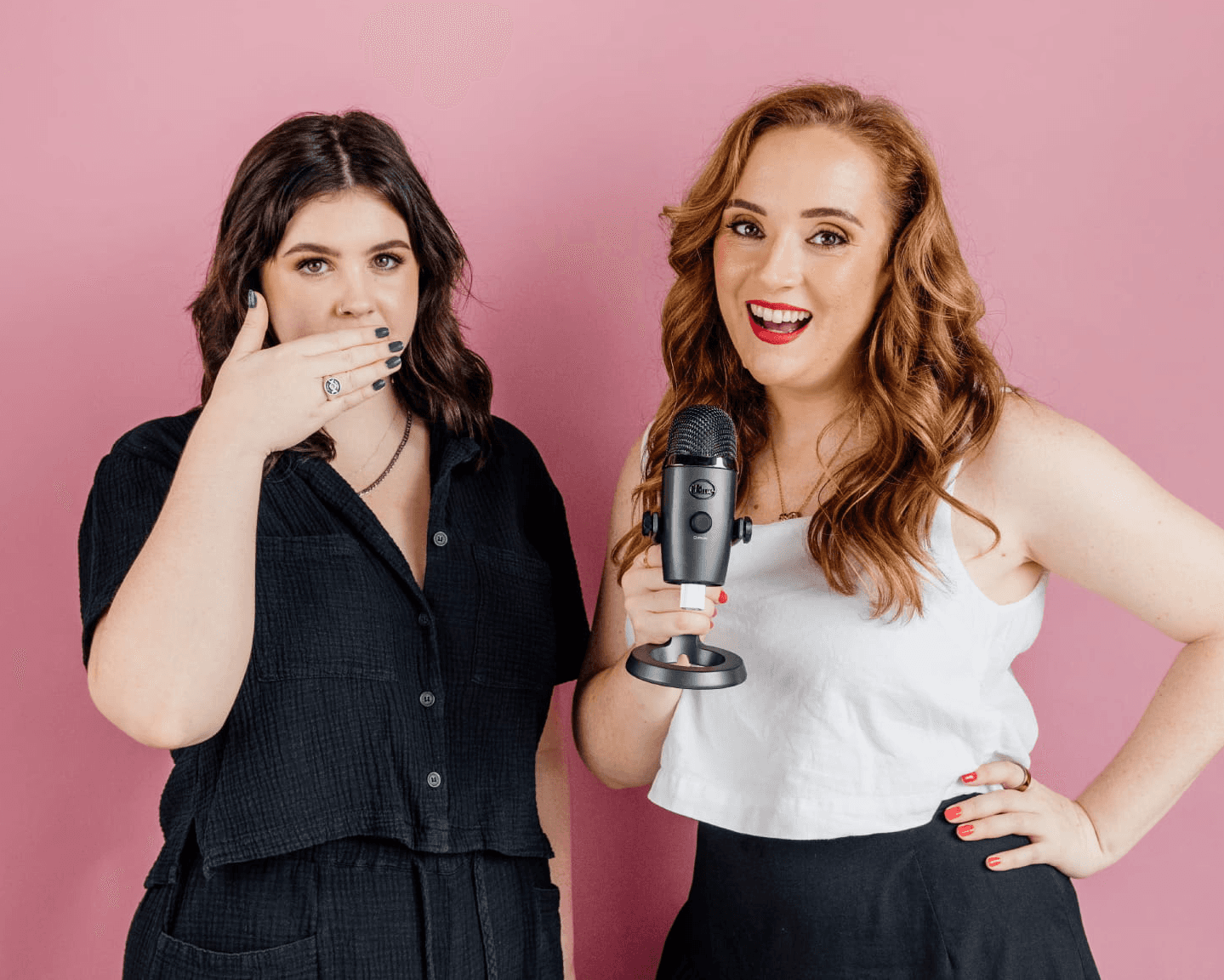
Hi and welcome to the Bright Minds of eCommerce podcast. I’m Dahna, founder of Bright Red Marketing, and I created this podcast because I wanted to bring you the best advice from Australian experts in eCommerce and eCommerce store owners. If you’re wanting relatable stories and actionable advice, as well as the latest Facebook advertising strategies, you’re in the right place. So let’s get into today’s episode.
Dahna Borg – Bright Red Marketing (00:41)
Hi, and welcome to the Bright Minds of eCommerce podcast. Today we’re here with Charlie from The Guideliner. Welcome, Charlie! So good to have you on the show. For everyone who doesn’t know, please tell us — what is The Guideliner?
Charlie Pond – The Guideliner (00:54)
The Guideliner is an easier way to apply winged eyeliner — in our unbiased opinion! It’s basically winged eyeliner using our peel, press and seal method that’s never been seen before.
Dahna Borg – Bright Red Marketing (01:00)
And I have personally tried this and it is so much easier than normal eyeliner. It’s unreal! So let’s get into it, because your branding is just stunning. Give us a little bit of the background — how did the branding come about? How did the business come about? Give us the full story.
Charlie Pond – The Guideliner (01:23)
How the business came about is actually a really cute story. Me and my partner were in the car on the way to the gym. We were going out for dinner that night and I really wanted to wear a winged eyeliner. I think I was watching a video of Kylie Jenner or something with amazing winged eyeliner and I was like, “I just know I can’t f***ing apply this.”
I actually had this idea back when I was at university — this peel, press and seal eyeliner. I got the idea from children’s tattoos, where you’d put a little dinosaur on your arm, add water, and the picture would be there. It’s a similar concept, just with different ingredients and materials. So I was complaining in the car that I couldn’t do my eyeliner and I was like, “I wonder if someone’s done this idea I had in uni.” I Googled it and couldn’t find anything, and I was like, you know what, let’s just make it ourselves — why not? And now here we are.
As far as branding, I actually did all the branding myself — the pink, the logo, all of that. We did have a team come in and rebrand some of the colours and the website. You actually had them on your podcast — it was Sparo Studios.
Dahna Borg – Bright Red Marketing (02:21)
They’re amazing. They’re actually redoing my website. Yeah, fabulous.
Charlie Pond – The Guideliner (02:39)
They’re so, so good. She came in and gave the colours and everything a little zhush. But yeah, the original branding, the logo, everything you see was all this gal right here on Canva.
Dahna Borg – Bright Red Marketing (02:49)
Love that. So obviously you had an idea in the car, you’ve tested it, you’ve Googled it, you’ve developed the product — how did you know that you actually had a business? When was that moment of, “We might actually have something here”?
Charlie Pond – The Guideliner (03:03)
I think it was when I made my first prototype. I didn’t want to use traditional tattoo materials near my eye — I wasn’t sure if that would be safe. So I made a prototype with different ingredients and materials, and we bought a Cricut machine to cut it out. When I put them on, they were both symmetrical because we’d cut out two of the same thing, and I was like, “Holy shit, this could really work.”
My husband at the time was building race cars and I was in marketing — random, I know. I was like, let’s just do this as a side gig and see what happens. So I made an Instagram, made a website, and pretty early on we just started getting sales. I remember our first sale — I heard this ding and I was like, “What is this?” We had no way to print a label, no way to even print a packing slip. I was like, “Okay, we’ve got a sale, someone’s given us their money — what do we do now?”
We just started making sales by accident from people finding us on Instagram. I think it’s really helpful that we are the only ones in the world that sell this everyday wearable eyeliner. You can get butterfly and bat designs and things for Halloween, but for everyday wearable eyeliner, we’re the only ones. It solves, in my opinion, the hardest part of the makeup routine. So it wasn’t too hard to make sales at the start.
That’s when I thought, okay, this could be a business. And then I actually found you — I don’t know if I was supposed to talk about this on the podcast, but I found you on an ad and I was like, “This girl looks really good, she could probably do really good ads.” We went with you for a very long time and we made our first 100k thanks to you. Our first $20,000 month was about a year and a half ago — I’ll never forget it. I was like, “I’m rich!” Still don’t have the mansion though, still working on it.
Dahna Borg – Bright Red Marketing (04:42)
I don’t mind! Look how far you’ve come now.
Charlie Pond – The Guideliner (05:04)
Yeah, I think it was really when we first went with you, because obviously we didn’t know what we were doing with ads, and we started to make five and six-figure months. I was like, okay, this could be something.
Dahna Borg – Bright Red Marketing (05:46)
It’s been such an incredible journey. I remember when we first had that meeting — I was just like, this is an incredible idea, the branding is stunning and you had such nice content to work with. And I think those things really make a big difference when you’re starting something like this, because a lot of people start and there are already other people doing what they’re doing.
So you had this really great niche opportunity with a beautiful brand to back it up. The website was always gorgeous — obviously it’s beautiful now, but even back then it was still a really good website. You had all of the pieces of the puzzle and they all aligned. I think we had a great time helping you, but you had all of those pieces already to take it to that level, and I think that really helped.
Charlie Pond – The Guideliner (06:09)
Yeah, I do think we are lucky as well, but we did work really hard. We both work on this full time now and we have a small team. But I kind of feel — not phony, more like imposter syndrome — when you speak to other people in the eCommerce space who are also really young brands, under two years old, and they don’t necessarily have the same amount of sales as quickly as we did. It’s not that we’re doing anything more spectacular than anybody else — our ads need work, our website needs work — we are literally winging it. Get it? We are literally winging it as we go along.
Every single day we try and do the best we can. We’re hiring more people than we’d ideally need to, and even knowing who those people are is a challenge. I just think the product itself, because it is so good and solves a real problem, and like you said it’s really niche — it really does help.
Dahna Borg – Bright Red Marketing (06:46)
Even your problems are on brand. I love that. How did you find the product development process? Obviously you had this idea in uni, it’s kind of based on something we’re all familiar with. But how do you get from that to the finished product?
Charlie Pond – The Guideliner (07:15)
It took so long because I wanted it to be high quality — not the traditional tattoo materials you see. Fun fact, it took us ages to find the supplier. Our paper supplier actually supplies quite a lot of studios in Hollywood for their fake injuries on film — realistic fake injuries. We use the same supplier as some of those studios. We really tried to find the highest quality. Our paper and our very thin layer of adhesive is dermatologically tested, medical grade — from a Korean supplier.
Yeah, it was just such a long process to find suppliers that were tested and safe, then pigments that were vegetable oil-based instead of petroleum-based. And to be fair, the longest part apart from actually making the Guideliners is the packaging. From the start I really wanted to be eco-friendly and sustainable — I didn’t want to bring out anything in plastic. Obviously it’s hard to be 100% plastic free, as some components just don’t exist in a non-plastic form. But all of our packaging is made out of paper, card or compostable components. Making pretty packaging that’s also sustainable was super tough.
Dahna Borg – Bright Red Marketing (08:35)
Yeah, and it’s something in the beauty industry especially — people expect a certain level of pretty, quality and aesthetics. So to be able to do that and keep it sustainable is a real testament to the effort you’ve put in.
Charlie Pond – The Guideliner (08:54)
Well, it was crazy. It would actually have been cheaper for us to just buy plastic pots and plastic packaging. It is so much cheaper and it looks so much nicer, but I just didn’t want to contribute to landfill. So even though our packaging might not be as pretty as some of the brands out there that use plastic, ours is more expensive to make — I can guarantee you that. I just could not believe that it would be more expensive to make something out of paper than to make something out of plastic.
Dahna Borg – Bright Red Marketing (09:22)
I just think it’s wonderful that you stuck so firmly to that despite the challenges. It’s a real testament to why you built this business and the ethics behind it. I love that. What would you say — obviously your business has grown wildly since we first met — what have been the biggest levers for growth? Is it certain marketing channels, partnerships, something else entirely? What’s been the biggest thing that has led to your growth?
Charlie Pond – The Guideliner (09:53)
I think Meta, honestly. I know it sounds like a sales call, but getting our Meta campaigns set up was definitely the first and biggest lever. It’s what jumped us from making no sales to actually having money to reinvest back into the company. So definitely Meta. We’ve had a few influencers find us too.
Dahna Borg – Bright Red Marketing (09:58)
Yeah, you had a really exciting one when we were working together.
Charlie Pond – The Guideliner (10:19)
They didn’t reach out to us prior — they just bought from us like a normal customer. I would happily have given it to them for free, but they bought it like a paying customer and then didn’t pre-warn us and just posted about us. It went viral and we’re super grateful for that. So we’ve had a few of those situations happen. We were featured on The Morning Show, which was quite a cool one — twice actually, once on The Good Stuff and once on The Morning Show. So those were quite big levers. Any PR or influencer activity has been quite good.
And since we’re now 18 months old and we’re in the position to have returning customers — we actually have quite a lot of returning customers, which is so good. It’s the best feeling. And quite a lot of them sign up to subscriptions for our refills. So I would say those are our three biggest levers right now.
Dahna Borg – Bright Red Marketing (11:02)
Wonderful. Is there anything else you’ve done to encourage those repeat purchases, aside from subscriptions?
Charlie Pond – The Guideliner (11:18)
Other than setting up your email flows correctly — just engaging with your community, listening to them if they’re wanting new colours or different styles. We haven’t brought out any yet because the process of making sure it’s all safe takes time. But just engaging with your community, talking to them, and if they see a video with a certain style they like, letting them know what that style is and giving them a cheeky little discount. I would say just listening to your customers, engaging with them, and email flows.
Dahna Borg – Bright Red Marketing (11:53)
Always email flows. You mentioned you’ve had quite a few successful partnerships and a lot of those found you through ads or just stumbling across the brand. Have you done anything more proactive around those partnerships and how has that gone?
Charlie Pond – The Guideliner (12:06)
So far it’s been pretty organic. We are going to start reaching out to influencers and doing PR. We were just, because we were such a small team, if we did have another big influencer blow-up like before — it was amazing that it happened, but it was really hard to keep up. Me and Danny didn’t have a day off for about 25 days. It was crazy. Because we make the products ourselves — we buy the raw materials, we make the product, we put the product in the packaging, then we can sell it. It’s not like we buy our product from China, put our logo on it, get it shipped here and just put it in a mailer. It’s a bit more labour intensive.
So I think we’re just trying to get all of our ducks in a row, get the key players in, and keep up with our ever-growing orders. Once we have all of those things lined up, we’re definitely going to be sending out some pretty cool PR packages. I’ve already designed them — they’re so cool.
Dahna Borg – Bright Red Marketing (13:03)
I love that. So obviously you guys have grown very quickly. Was there a point where you looked around and thought, the way we’re doing this is not working and we need to change some things?
Charlie Pond – The Guideliner (13:13)
Every day. I think a big part of it is imposter syndrome — like, I must be missing something because I don’t 100% know what I’m doing. Like I said, I’ve learned a lot and I have a good idea. But we bootstrapped this whole thing, it’s just me and Danny, and we still own 100% equity. We’ve done everything ourselves.
But every single day I sit there and think, okay, this needs to be done more efficiently. We’ve either got to hire someone to do it, which costs money, or make something more efficient in-house and keep as much money in the company to reinvest back in. That is the most important thing for us right now. Anything I can see that can make it more efficient — even right down to pick-packing. We had boxes that needed tape and I didn’t want our pick-packers to have to pull tape manually. So I literally got a tape dispenser where you click a button and it feeds you out some tape. Anything I can do to save two seconds, I’ll find it.
Dahna Borg – Bright Red Marketing (14:17)
So other than a pre-cutting tape machine, what have been some of your biggest efficiencies? I think you moved into a warehouse recently.
Charlie Pond – The Guideliner (14:26)
Yep. We moved into a warehouse. We were with a 3PL but you just have no control over the mistakes they make — things they send out, whether they’re putting in free samples for someone or not. We wanted it in-house. It just feels more personal. Sometimes I’ll get up on a Monday and help with pick-packing, and it’s so nice to see repeat customers’ names and recognise them.
So we got a warehouse to bring pick-packing in-house, and we went with apps like Starship where you can print all of your labels and packing slips with two clicks of a button instead of doing each one manually like we did at the start. There are just so many things we did at the start that took so much time. I look back at it now and just want to cry — I can’t believe how manually we used to do everything. But getting a warehouse, hiring a small team that cares more about your business than an external person who’s got 50 other clients — warehouse, small team, pick-packing efficiencies.
Dahna Borg – Bright Red Marketing (15:27)
I think it’s a good attitude, especially because you guys are still so fresh. It’s been what, 18 months? Two years? You’ve grown so quickly and it can get away from you. You can make all these big decisions in the interest of growth and then just kind of let it escape. I think it’s really great that you’re going, okay, this is working really well but we’re going to pull it back; this is working but we’re going to change this. I think that’s going to be a testament to your success.
Charlie Pond – The Guideliner (16:00)
I hope so. Because I’m so bossy, Danny’s sick of me walking in and going, “Right, this isn’t working.”
Dahna Borg – Bright Red Marketing (16:02)
All right, we’re going to change something. What are we changing today?
So obviously we’re 18 months in and the business has grown really quickly. What is it that you know now that you wish you knew when you started?
Charlie Pond – The Guideliner (16:17)
One of the biggest ones is: you won’t please everybody. Not everyone’s going to love your product, not everyone’s going to love your branding — you just won’t please everybody. And I didn’t realise how — how do I say this nicely?
When you’re on the business end of things and you ship things out, we have nothing to do with the couriers, nothing to do with the postal service. All we can do is print your label, give it to the postman, and in theory they ship it to you. So if they ship it somewhere else, or the timeframe blows out by a week, we get all of the stick. We’ve had customers speak to me and members of my team really harshly, and it’s like — we have nothing to do with that. Of course we’ll do everything we can to help and sort it out, we won’t leave you unhappy. But they talk to you like it’s your fault. I never saw things like that happening.
Dahna Borg – Bright Red Marketing (17:03)
Yeah. I can’t do it — it’s not in my hands. I’m not on my little motorbike delivering your parcel for you.
Charlie Pond – The Guideliner (17:20)
I understand the customer’s frustration. I would say that was the biggest one — there is such a disconnect between being a business and being a consumer. And it’s unfair of me to expect my customers, who don’t own and run a business, to see things for what they are.
Things like pricing — if someone complains that we’re expensive, they don’t see what all companies go through. You sit down and look at the cost price, and then ask yourself: do you want to pay your workers above minimum wage? I don’t want to pay my team minimum wage — I want to pay them above it. I want to do sustainable packaging, which as I said is more expensive. You’ve got to have a profit margin to grow, reinvest the savings me and Danny put in, pay your suppliers, pay agencies — all of those things add up. I think quite a lot of consumers — and I was the same before I had a business — think that prices are somewhat guessed, like, “I just want to sell it for this.”
Dahna Borg – Bright Red Marketing (17:59)
And other people shouldn’t have to work for free. Everyone deserves to get paid for the work they’re doing, including you. We just pull this number out of the air.
Charlie Pond – The Guideliner (18:33)
I don’t blame them — if you don’t own a business, how would you know? But the pricing is so strategic and done for a reason. At the end of the day, companies want to sell as many products as possible, so we’re not going to make something unnecessarily expensive, because we’d have less sales. These are just some examples, but the biggest thing I wish I’d known is that there would be such a disconnect around things like that.
Dahna Borg – Bright Red Marketing (19:01)
On the pricing — was there anything you learned around that? Because coming from a consumer perspective to starting a business, it’s something a lot of businesses struggle with — calculating margins properly and making sure you’ve covered all your expenses. Were there any big lessons around pricing you had to learn?
Charlie Pond – The Guideliner (19:18)
I kind of winged everything myself at the start. I sat down and looked at the basics — what is our cost price, what are the labour costs, what profit margin do we need to grow — factoring in marketing costs and all of that — and I came up with the pricing. I think for what I’m about to say, I’m going to get a bit of stick. We’ve had mentors along the way and I’ve listened to people on YouTube, business gurus and all that, and every single one always says: put your prices up. Just put your prices up. People, if they want it, they’ll pay for it.
I don’t know if I’m just a big softy, but I just can’t put prices up for the sake of it. Because we’re the only ones in the world that sell this and people will just pay for it — I just can’t do that. For the businesses or brands that hear this and think, “just put your prices up, it’s fine” — I don’t think consumers realise that as businesses, when we reach out for help or guidance from other businesses, nine times out of ten that’s what we’re told. And I’ve never done it. If prices have gone up, it’s for a reason.
Like I said, we still make and manufacture the products in-house. The second we can outsource that it becomes a lot cheaper, and best believe my prices will be dropping. But around pricing it’s super difficult — to make it competitive enough that customers don’t feel like we’re overpriced. That’s not a nice feeling for any brand to have.
But at the same time, I’m not going to compromise on sustainability or paying my team a fair wage, or me and Danny taking a fair wage. We’re not getting paid like we’re living in the millions.
Dahna Borg – Bright Red Marketing (20:51)
You’re not living like kings in your mansion just yet.
Charlie Pond – The Guideliner (20:54)
100%.
Dahna Borg – Bright Red Marketing (20:55)
Yeah, I love that. I know you’ve had some challenges — we’ve talked about a couple of them. What would you say is the biggest challenge you’ve faced since launching, and how have you overcome it?
Charlie Pond – The Guideliner (21:05)
Scaling, keeping up with demand. Like I said, because we manufacture in-house and we put it all into the packaging and ship it out — definitely keeping up with demand, manufacturing, not being able to bring out other colours, sizes and collections as quickly as we’d like. I do think it’s one of the biggest things holding us back. We just physically cannot keep up with things the way they are now. We have a plan in place to sort all of that out — it’s coming, it’s getting sorted — but it’s not as quick as people might think it is.
Dahna Borg – Bright Red Marketing (21:36)
What are you most proud of when you look at your journey over the last 18 months?
Charlie Pond – The Guideliner (21:40)
Well, working on it with your husband — I feel like that would make or break some marriages. We’ve been doing it for two years now and I can honestly say we’ve not had one big argument. If there’s something we don’t agree on, we’ll sit down, put the business stuff aside, and talk to each other as husband and wife. I think that’s something I’m really proud of.
And also the amount of times I’ve heard, “How do you run a business with your partner? Do you not want to kill each other?” I think because I’m quite hot-headed and very bossy — Danny is the biggest golden retriever ever. I’ve never heard him raise his voice in five years. I’m very lucky. So running it with a partner and really enjoying it, not just making it work but genuinely enjoying it — that’s something I’m proud of.
Also Danny and I bootstrapping it from day one. We still own all the equity, we don’t have any investors directing the company. And Danny went from building F1 race cars for a living to literally helping make machine parts for producing the Guideliners at a mass level. I think that’s probably the thing I’m most proud of.
Dahna Borg – Bright Red Marketing (22:54)
I love that. You guys should be so proud of what you’ve built — it’s an incredible thing. If there’s one thing that you think is going to take The Guideliner to the next level, what do you think it’s going to be?
Charlie Pond – The Guideliner (23:04)
Getting our backend manufacturing processes dialled — having them down, hiring the key team players to make that happen — and then really pushing PR. It is frustrating as a company to not be able to push as hard as you’d like. So I think once we have that done and dialled, it’ll be pushing hard with PR and scaling ads.
It’s just super hard right now because — I haven’t told you this yet — we made our first million in revenue. So technically on paper we’re now a million-dollar brand. Which sounds super great, but…
Dahna Borg – Bright Red Marketing (23:43)
I’m so happy for you, that’s so exciting!
Charlie Pond – The Guideliner (23:48)
I didn’t know this, but apparently when you’re making between one and three million a year in revenue, you’re in what’s called the swamp. You don’t quite have enough money to hire the whole big team you need, but obviously if you’re making a million dollars, you’re busy. You don’t have all the spare cash to hire the whole team you need, but you and your small team are super busy trying to keep up with everything. There’s not much room to look at scaling.
Dahna Borg – Bright Red Marketing (24:14)
You’re just refining and optimising.
Charlie Pond – The Guideliner (24:16)
Exactly. So I think once we have all the processes and manufacturing dialled down and we can push with new colours and a bit harder to get more sales — that’s what will bring The Guideliner to the next level.
Dahna Borg – Bright Red Marketing (24:29)
They say the first million is the hardest, and then apparently after your first million being the hardest, you get into the swamp. So you’re just going to get past that and it’ll be happy days.
Charlie Pond – The Guideliner (24:40)
You see, it’s harder now than back when we were making $20k months. It’s so much harder now.
Dahna Borg – Bright Red Marketing (24:45)
So many challenges! Final couple of questions we like to ask everyone before we wrap up. Do you have a favourite business book or podcast?
Charlie Pond – The Guideliner (24:55)
I liked Dot Com, the book. I think that was quite good.
Dahna Borg – Bright Red Marketing (25:00)
And what’s the best piece of business advice you’ve ever received?
Charlie Pond – The Guideliner (25:03)
Just do it. Or more specifically — if you’re running a business, don’t wait until everything’s perfect. I remember right at the start, the packaging had to be perfect, the product had to be perfect, the social media had to be perfect, or I wasn’t going to launch. Just do it. You learn along the way through feedback from your customers and your peers when you network. Get your product out there, get feedback in real time, and then iterate and improve.
Dahna Borg – Bright Red Marketing (25:28)
We love that. Well, thank you so much for joining us — it’s been an absolute pleasure having you on the show.
Charlie Pond – The Guideliner (25:32)
So fun!
Dahna Borg – Bright Red Marketing (25:33)
Thank you for listening to the Bright Minds of eCommerce podcast. As always, you can find the show notes on our website at brightredmarketing.com.au. Just look for the podcast page. Thanks for listening.